Bébé the Penguin and Other Must-Haves for Polar Nonfiction Adventures
Published on January 20, 2026
By Allie
Arctic exploration can be traced back for millennia. But the race for the poles didn’t snowball until the 19th and 20th centuries. Explorers began to catch the “Arctic fever,” with ambitions—or even obsessions—to be the first to reach the North or South Pole.
These chilling, true stories are often tragic. But they also teem with action, suspense, and inspiration—as well as petty drama, hilarity, and unexpected anecdotes.
Here are five must-haves for an unforgettable polar adventure.
1. A beloved penguin named Bébé
In 1897, Adrien de Gerlache wanted to be the first to reach the magnetic South Pole. Things certainly went south.
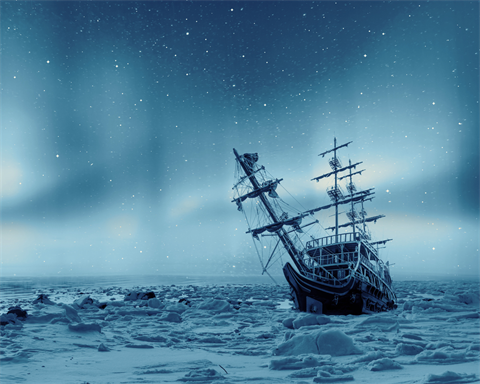
After their ship was trapped in the ice, the crew had no choice but to settle in for the long winter: freezing temperatures, 24-hour darkness, and limited supplies. Not to mention the constant creaking of the ice—a haunting reminder that their ship could be crushed at any moment. It truly became a Madhouse at the End of the Earth.
Amidst the monotony of it all, there were penguins. One gentoo took a liking to the crew and made himself at home aboard their ship. Lovingly named Bébé, this spoiled penguin served as an unofficial mascot—no doubt lifting the crew’s weary spirits.
2. Heartfelt letters from home
Led by George W. De Long, the USS Jeanette set off in 1879, aiming to reach the North Pole. But the Jeanette was locked in the ice for nearly two years before the ship was eventually crushed. The crew were left to find their own way home.
Although she couldn’t send them, Emma De Long wrote letters to her husband, George, while he ventured north. In the Kingdom of Ice includes these letters, providing an ironic and heartbreaking perspective that’s often lost to history—that of the families who spend years wondering when (or if) their loved ones will ever return home.
3. Titina, the twelve-pound fox terrier
Realm of Ice and Sky tells the stories of three Arctic aviators. One of these explorers brought along his little dog—for not one, but two flights over the North Pole. (And yes, the book has photographs of her).
On the second voyage, disaster struck. The airship Italia crashed, leaving the crew—and little Titina—stranded on the Arctic sea ice. Their lives now depended upon a miraculous rescue.
But fear not. If Titina was brave enough to fend off a polar bear, you can bet your bottom dollar she was fierce enough to make it home.
4. Indispensable knowledge from Inuit communities
Many Arctic voyages relied heavily on Inuit guidance and skills: from navigation and survival, to hunting and nutrition, sewing sealskin clothing, and so much more. In After the North Pole, Erling Kagge researched a number of Inuit practices before his attempt to be the first to ski to the North Pole—without dogs, depots, or motorized aids.
Inuit crewmembers were not uncommon on polar expeditions. When the Karluk set sail in 1913, the crew included an entire Inuit family—a father, a mother, and their two young daughters. Read about their adventure in Empire of Ice and Stone.
5. Inner strength
Descended from one of Shackleton’s crewmembers, Henry Worsley felt deeply connected to Antarctica. In 2015, he attempted what no explorer had done before: a 900-mile trek across Antarctica—on foot, and alone.
This adventure would test Worsley’s fortitude even further. Readers of The White Darkness will also need their own inner strength. The harsh realities of such a brutal landscape make for a spellbinding, but haunting tale of man versus nature.
Bundle up, reader! You’re bound to catch the Arctic fever with these chilling reads.